
Golden-cheeked Warbler Tours near Austin, Texas
The only bird that nests nowhere on Earth but Central Texas
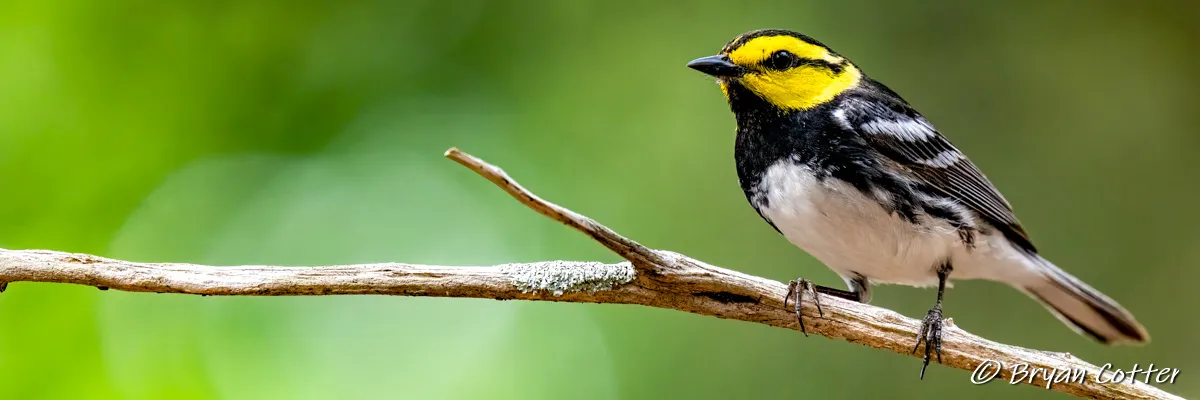
Where & when: The Golden-cheeked Warbler is easiest to find from mid-March through late May in the oak-juniper canyons of the Texas Hill Country just west of Austin. The most reliable spot is Balcones Canyonlands National Wildlife Refuge (Warbler Vista), about 45 minutes from downtown — with Doeskin Ranch, Government Canyon, and Lost Maples as strong backups. It’s federally endangered, tied to mature Ashe juniper, and found mostly by its buzzy song — which is exactly why a guided half-day is the surest way to see and photograph one.
Private and custom — just you (1–2 birders), on the date that works for you, not a fixed-schedule group tour. All skill levels, with a trip report and your full bird list after. The season is short (about 8 weeks) and dates fill early.
Check dates & book → See all prices
When to see the Golden-cheeked Warbler
Males arrive on territory and start singing in mid-March, and they’re at their most findable — and most vocal — from then through mid-to-late May. That stretch is the peak for song and numbers. They don’t disappear afterward, though: birds linger in the Hill Country through the summer, often into August, until the last young of the year have fledged — so a later trip can still connect, the birds are just quieter and take more patience to find. By early fall the population heads south to the pine-oak forests of Central America. The earlier in the season you come, the more actively the males sing and defend territory, which makes them far easier to find — and if you want the two Hill Country endemics together, aim for April, when the Black-capped Vireo has also arrived.
Where we’ll look
Balcones Canyonlands NWR — Warbler Vista
The marquee site and our usual first stop — about 45 minutes northwest of Austin, with trails (Cactus Rocks, Vista Knoll) built right through prime warbler habitat.
Doeskin Ranch & Shin Oak
Also part of Balcones Canyonlands — Doeskin for warblers and canyon species, and the Shin Oak deck for the Black-capped Vireo, so we can target both endemics in one morning.
Government Canyon (San Antonio side)
A reliable alternate with excellent juniper canyons, useful when we want a different angle or the refuge is busy.
Lost Maples & the western Hill Country
About two hours out for a fuller day — classic Edwards Plateau habitat with both endemics plus a long list of Hill Country specialties.
Why go with a guide
The Golden-cheeked Warbler is one of the harder North American birds to find on your own. It’s found mostly by song — a high, buzzy phrase you have to know to pick out — and it lives on steep, wooded canyon slopes where it can stay frustratingly hidden. It’s also federally endangered, so knowing how to find and enjoy it without disturbing nesting birds matters. I know the songs, the exact slopes and perches the males favor, and the timing that puts the odds in your favor — so a half-day with me skips the searching and gets you on the bird.
A local, private trip — on your schedule
Most of the “Texas Hill Country” birding tours you’ll find are run by big national companies that swing through once a year on a fixed date, in a group of a dozen, booked months ahead. This isn’t that. I’m based right here in Austin and guide these birds all season, so your trip is private, custom, and on the date that works for you — a Saturday morning, a weekday, whenever you’re in town. Just you and your group (usually one or two birders), focused entirely on your target bird, with a guide who knows exactly which slopes the warblers are singing on this week. Flexible, personal, and local — the way chasing one special bird should be.
See both Hill Country endemics in one morning
The Austin area is the only place on the planet where you can see the Golden-cheeked Warbler and the Black-capped Vireo in the same morning — the two birds whose breeding ranges are essentially limited to the Texas Hill Country. April is the sweet spot for the pair. It’s the classic “two lifers before lunch” trip, and the reason birders fly in from all over the country. See our Hill Country Endemics tour to target both in one outing.
Your guide
I’m Bryan Cotter, an Austin-based professional birding guide. In 2025 I became the 10th person in history to record 500 bird species in Texas, and I hold the Travis County (Austin) Big Year record of 330 species — so the birds right here in my home county are the ones I know best. I’m a photographer at heart, so if you’re after images as well as a sighting, we’ll work for the light and the perch. More about me →
Golden-cheeked Warbler tour FAQ
Where is the best place to see a Golden-cheeked Warbler near Austin?
Balcones Canyonlands National Wildlife Refuge (Warbler Vista), about 45 minutes northwest of downtown Austin, is the most reliable spot. Doeskin Ranch, Government Canyon near San Antonio, and Lost Maples in the western Hill Country are strong alternatives.
What time of year can you see the Golden-cheeked Warbler?
They’re present from mid-March into late summer. The peak — singing males, best numbers, easiest to find — is mid-March through late May, but the birds stay on territory through the summer, often into August, until their last young fledge; a later trip can still connect, just with quieter, harder-to-find birds. By early fall they migrate to Central America.
Do I need a guide to see a Golden-cheeked Warbler?
Not required, but it makes a big difference. The bird is found mostly by its song, lives on steep wooded canyon slopes, and is federally endangered, so a guide who knows the song, the sites and the ethics greatly raises your odds of a good look in a single morning.
Can you photograph the Golden-cheeked Warbler?
Yes. Early morning is best, when males sing from exposed perches. Bring a telephoto lens — I’m a photographer and will work to get you on a singing male in decent light.
How rare is the Golden-cheeked Warbler?
It is federally endangered and is the only bird whose entire breeding range is within Central Texas — it nests nowhere else on Earth. That makes it a true bucket-list bird for visiting birders.
Can we see the Black-capped Vireo on the same trip?
Yes — in April especially, we can target both Hill Country endemics in one morning at sites like the Shin Oak deck and Doeskin Ranch. It’s the classic two-endemic Austin trip.
Is this a private tour or a group tour?
Private and custom. It’s just you and your group — usually one or two birders — on a date you choose, not a fixed-schedule group tour. Unlike the national companies that swing through Texas once a year, I’m based in Austin and guide these birds all season, so we go when it works for you.
Can I book a Golden-cheeked Warbler tour on my own dates?
Yes — that’s the advantage of a local private guide over a national tour company. Pick any date in the mid-March through May window (or later in summer) and I’ll do my best to make it work, right down to a specific morning.
Book your Golden-cheeked Warbler tour · Back to the main page
Birding Tours Texas
Let's Go Birding!
email me privacy policy
copyright © 2026 by Birding Tours Texas. All Rights Reserved
site by: cotter designs
Guided by Bryan Cotter