
Black-capped Vireo Tours near Austin, Texas
One of the Hill Country’s two endemic breeders — and a conservation success story
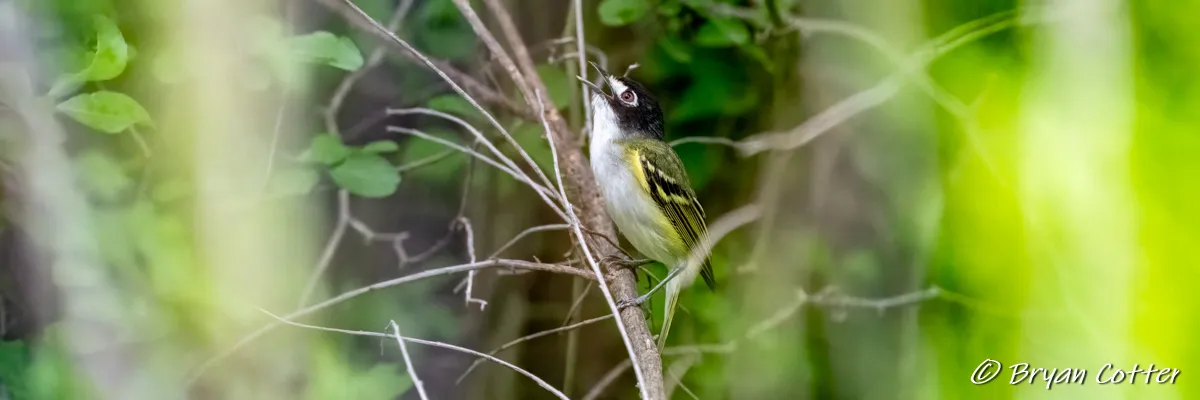
Where & when: The Black-capped Vireo breeds in the scrubby oak hillsides of the Texas Hill Country from early April into late summer (at its best April through June). The most reliable spot near Austin is the Shin Oak Observation Deck at Balcones Canyonlands National Wildlife Refuge, about an hour northwest of downtown — with Doeskin Ranch and the Kerr Wildlife Management Area in the western Hill Country as strong backups. It’s a small, restless bird of dense low scrub, found mostly by its rich, jumbled song — which is exactly why a guided half-day is the surest way to see and photograph one.
Small groups, all skill levels, a trip report with your full bird list after. The window is short and dates fill early — and in April you can pair it with the Golden-cheeked Warbler.
Check dates & book → See all prices
When to see the Black-capped Vireo
Males arrive on territory and begin singing in late March and early April, and they’re at their most findable from then through May and into June, while they’re still singing and defending territory — that’s the peak. They linger in the Hill Country well past it, though, often into August, until the last young of the year have fledged; by mid-summer they grow quiet and take more work to find, and by fall the population has left for western Mexico. So while April through June is the sweet spot — the earlier you come, the more the males sing from exposed perches — a later-season look is still very possible. If you want both Hill Country endemics in one morning, April is ideal, when the Golden-cheeked Warbler is also on territory.
Where we’ll look
Shin Oak Observation Deck — Balcones Canyonlands NWR
The marquee site for this bird — a deck built to overlook prime shin-oak vireo habitat, about an hour northwest of Austin. Our usual first stop in vireo season.
Doeskin Ranch
Also part of Balcones Canyonlands — brushy hillsides and canyon trails that hold the vireo plus the Golden-cheeked Warbler, so we can target both endemics in one morning.
Kerr Wildlife Management Area
A classic western Hill Country site with managed shin-oak habitat — excellent for the vireo on a fuller day, roughly two hours out.
The western Hill Country
Regenerating oak scrub on broken hillsides across the Edwards Plateau — the vireo’s preferred habitat, with a long list of Hill Country specialties alongside.
Why go with a guide
The Black-capped Vireo can be a genuinely tricky bird. It lives in dense, low, regenerating oak scrub — not the tall juniper of the warbler — and it’s a small, restless skulker that’s usually heard before it’s seen. It nests at a handful of managed sites, and it does best when birders know how to draw a look without pressuring nesting birds. I know the song, the exact patches of scrub the males hold, and the timing that puts the odds in your favor — so a half-day with me skips the searching and gets you on the bird.
A conservation success story
The Black-capped Vireo was listed as federally endangered in 1987, hit hard by habitat loss and cowbird nest parasitism. Decades of habitat management and cowbird control worked: the species recovered enough to be removed from the endangered species list in 2018. It’s still local and dependent on the right early-successional scrub, but at managed sites like Balcones Canyonlands it’s findable in good numbers in season — one of the better recovery stories in American birds.
See both Hill Country endemics in one morning
The Austin area is the only place on the planet where you can see the Black-capped Vireo and the Golden-cheeked Warbler in the same morning — the two birds whose breeding ranges are essentially limited to the Texas Hill Country. April is the sweet spot for the pair. It’s the classic “two lifers before lunch” trip, and the reason birders fly in from all over the country. See our Hill Country Endemics tour to target both in one outing.
Your guide
I’m Bryan Cotter, an Austin-based professional birding guide. In 2025 I became the 10th person in history to record 500 bird species in Texas, and I hold the Travis County (Austin) Big Year record of 330 species — so the birds right here in my home country are the ones I know best. I’m a photographer at heart, so if you’re after images as well as a sighting, we’ll work for the light and the perch. More about me →
Black-capped Vireo tour FAQ
Where is the best place to see a Black-capped Vireo near Austin?
The Shin Oak Observation Deck at Balcones Canyonlands National Wildlife Refuge, about an hour northwest of downtown Austin, is the most reliable spot. Doeskin Ranch and the Kerr Wildlife Management Area in the western Hill Country are strong alternatives.
What time of year can you see the Black-capped Vireo?
They’re present from early April into late summer. The peak is April through June, when males sing on territory; after that they grow quiet but remain into the summer, often into August, until their last young fledge, so later trips can still connect. They leave for western Mexico by fall.
Is the Black-capped Vireo still endangered?
No. It was listed as federally endangered in 1987, but after decades of habitat management and cowbird control it recovered and was removed from the endangered species list in 2018. It’s still local and habitat-dependent, but findable at managed sites like Balcones Canyonlands in season.
Do I need a guide to see a Black-capped Vireo?
Not required, but it makes a big difference. The vireo is a skulky bird of dense low scrub, found mostly by its song, at a handful of specific sites — so a guide who knows the song, the patches and the timing greatly raises your odds of a good look in a single morning.
Can you photograph the Black-capped Vireo?
Yes, though it’s a challenge — the bird is small, active and often low in the scrub. Early morning, when males sing from exposed perches, gives the best chances. Bring a telephoto lens; I’m a photographer and will work to get you on a singing male.
Can we see the Golden-cheeked Warbler on the same trip?
Yes — in April especially, we can target both Hill Country endemics in one morning at sites like Doeskin Ranch and the Shin Oak deck. It’s the classic two-endemic Austin trip.
Book your Black-capped Vireo tour · Golden-cheeked Warbler tour · Back to the main page
Birding Tours Texas
Let's Go Birding!
email me privacy policy
copyright © 2026 by Birding Tours Texas. All Rights Reserved
site by: cotter designs
Guided by Bryan Cotter