
Birding Hornsby Bend Bird Observatory, Austin
Travis County’s best shorebird & waterfowl spot — 270+ species
Where & when: Hornsby Bend Bird Observatory, on the Colorado River just east of Austin, is Travis County’s premier spot for shorebirds and waterfowl — over 270 species recorded across its water-treatment ponds, drying beds, and river trails. Waterfowl peak in the colder months (November–February), while spring and fall migration bring shorebirds to the drying beds and warblers, tanagers, and vireos to the river woods. It’s an active treatment facility, so bring a photo ID to enter (access is free).
It’s a favorite stop on an Austin-area day tour — I know which ponds are holding birds and where the rarities turn up in the drying beds. My last outing here: 87 species in a single September 2026 morning. Half-day from $250 for 1–2 birders.
Check dates & book → See all prices
This is the best place in Travis County for waterfowl such as ducks and definitely shorebirds. It's located east of Austin and it's part of a water treatment plant so showing an ID is required to enter.
There's plenty of water to scout around the ponds and trails along the river.
On the way in, you want to check out the drying beds as there is a good chance at some rarities in those as there is almost always water for shorebirds and such to forage in.
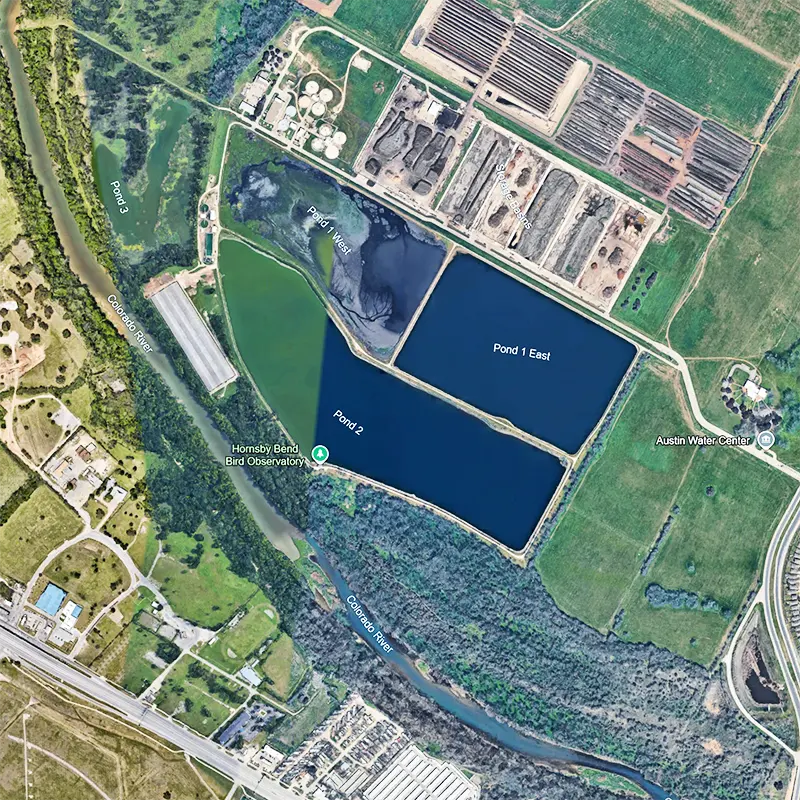
The ponds usually hold a good amount of waterfowl, usually during the colder months when all of them are south. There is usually some straglers though so always check all the water. If there isn't much as far as waterfowl, check all the grass clumps or mud flats for shorebirds like sandpipers, Ibis, egret or Willets or Whimbrel. There's been a Virginia Rail in the back of pond 1w so look and hear closely.
The River trails are a great place to look for other birds such as warblers, tanagers, Vireos, etc. There's always a chance at an owl as well. There are usually 3 or 4 species of owl here. A Barred Owl, Eastern Screech-owl or Great Horned Owl could pop out at any time or there's a small chance at a Barn Owl that lives here.
Along the river trail, there are 2 sections of the trail that go to the river on either side of the island in the middle of the river. You can sometimes see some of the rarer varieties of Travis County along the river like a Green Kingfisher.
Most of the main river trail goes along behind Pond 2 here but it continues along behind a field and then Pond 3. Well, it used to be a pond but since has dried up in the last couple years. The trail then veers East and then you can continue to where the trail connects with the trail from Platt Lane. You can make it a very long walk if you traveled along that trail as well.
When you leave, don't forget to stop by off the road over looking what us locals call Pond 973 since it's right off the highway there. There's a small alligator that can sometimes be seen here but there's a chance at other birds that come here like a Little Blue Heron and in some years, a Purple Gallinule.
Satellite View of Hornsby Bend Bird Observatory
Hornsby Bend birding FAQ
What birds can you see at Hornsby Bend?
Shorebirds (sandpipers, Willets, Whimbrel), ducks and other waterfowl, ibis, egrets, and rails like Virginia Rail around the ponds and drying beds; warblers, tanagers, and vireos along the river trails, plus a good chance at Barred, Eastern Screech, Great Horned, and even Barn Owl. Green Kingfisher and other Travis County rarities turn up too.
When is the best time to visit Hornsby Bend?
Waterfowl are best in the colder months, November through February. Spring and fall migration bring shorebirds to the drying beds and migrant songbirds to the river woods. Rarities can show in the drying beds year-round, since there's almost always water there.
Do you need an ID or permit to enter Hornsby Bend?
Yes — it's part of an active water-treatment facility, so you'll need to show a photo ID to enter. Access is free, and the ponds, drying beds, and river trails are open to birders.
Where are the best spots within Hornsby Bend?
The drying beds on the way in (rarities and shorebirds), the ponds (waterfowl in winter), the river trails (songbirds, owls, and Green Kingfisher), and “Pond 973” off the highway on the way out, which can hold Little Blue Heron and, some years, Purple Gallinule.
Back to Austin birding · All destinations · Back to the main page
Birding Tours Texas
Let's Go Birding!
email me privacy policy
copyright © 2026 by Birding Tours Texas. All Rights Reserved
site by: cotter designs
Guided by Bryan Cotter