
Whooping Crane Tours in Texas
North America’s tallest bird — and one of its greatest conservation stories
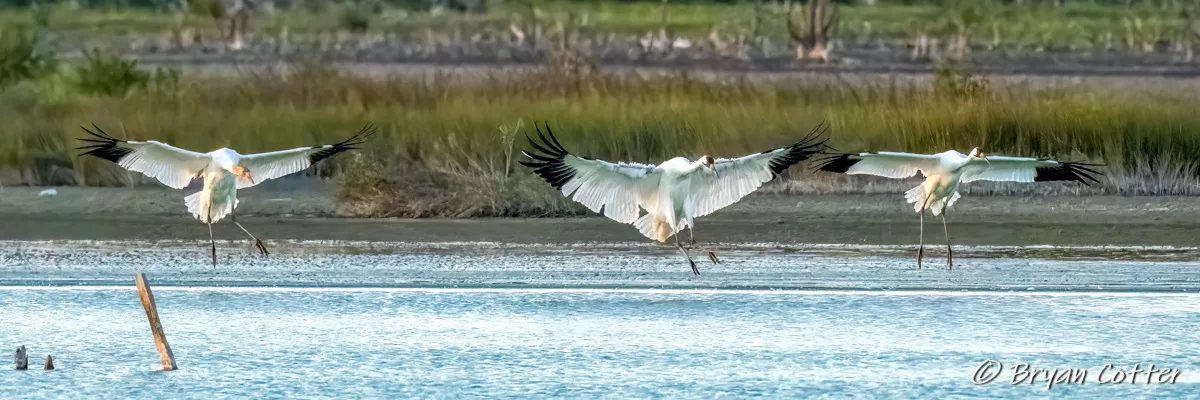
Where & when: The wild Whooping Cranes winter on the central Texas coast at Aransas National Wildlife Refuge and around Rockport–Fulton, roughly November through March (December–February is the heart of the season). This is the only self-sustaining wild migratory flock of Whooping Cranes on Earth — a bird that recovered from about 15 individuals in the 1940s to more than 500 today. Standing nearly five feet tall, they’re a true bucket-list sighting, best reached on a guided coastal trip from the Austin area.
A full-day or multi-day tour from the Austin area, timed to the wintering flock and combined with the rest of the central coast’s superb winter birding. Small groups and a full trip report afterward.
Check dates & plan your trip → See all prices
When to see the Whooping Cranes
The cranes arrive from their breeding grounds in Wood Buffalo National Park in Canada starting in late October and are reliably present from November into March, with the peak from December through February. By late March they begin the long migration north again. Winter is also the richest season on the central Texas coast generally, so a trip timed for the cranes puts you among ducks, raptors, sparrows, and shorebirds at the same time.
Where we’ll look
Aransas National Wildlife Refuge
The heart of the wintering range. The refuge has an observation tower and trails where cranes are often visible out over the marsh, along with alligators, deer, and a long list of coastal birds.
Rockport & Fulton
The gateway town for the cranes, with productive bays, flats, and birding spots — and the departure point for the local boat tours that get you closest to the birds.
By boat on the bays
A boat trip into the Aransas backwaters is the classic way to see Whooping Cranes up close as they feed on blue crabs along the shoreline — the best photo opportunity of the trip.
Lamar & Goose Island
Nearby peninsulas and the state park add more coastal habitat, wintering waterfowl, and a good chance at Roseate Spoonbills and other central-coast specialties.
Why go with a guide
Whooping Cranes are wide-ranging and protected, and they’re best appreciated with someone who knows where the family groups are settling in a given winter and how to view them without disturbance. Pairing the refuge, the right vantage points, and a boat trip into one day (or two) takes local knowledge and timing — and there’s a whole cast of winter coastal birds to enjoy alongside the cranes. I handle the plan so you get the most of a special bird.
More winter coast birding
The central coast pairs naturally with the rest of the state’s cool-season birding. See the Galveston & upper coast for winter waterfowl and shorebirds, or the Rio Grande Valley for South Texas specialties — a Whooping Crane day makes a great anchor for a longer winter trip.
Your guide
I’m Bryan Cotter, an Austin-based professional birding guide. In 2025 I became the 10th person in history to record 500 bird species in Texas, and I hold the Travis County (Austin) Big Year record of 330 species. I’m a photographer at heart, so if you want images of the cranes as well as a sighting, we’ll work for them. More about me →
Whooping Crane tour FAQ
Where can I see Whooping Cranes in Texas?
On the central Texas coast at Aransas National Wildlife Refuge and around Rockport and Fulton, where the wild flock spends the winter. You can see them from the refuge’s observation tower and trails, and up close on a boat tour out of Rockport.
What time of year can you see Whooping Cranes at Aransas?
From about November through March, with December through February the peak. The cranes breed in Canada in summer and winter on the Texas coast, then head north again by late March.
Is a boat tour or land the best way to see them?
Both work. The refuge tower and trails give reliable, if sometimes distant, views, while a boat trip into the Aransas bays gets you closest to feeding cranes and is the best photo opportunity. A guided trip can combine both.
How rare is the Whooping Crane?
It is endangered. The Aransas–Wood Buffalo flock that winters in Texas is the only self-sustaining wild migratory population in the world — it recovered from around 15 birds in the 1940s to more than 500 today, making it one of conservation’s great success stories.
What else will we see on a winter coast trip?
Plenty — Sandhill Cranes, Roseate Spoonbills, herons and egrets, large numbers of ducks and other waterfowl, raptors, sparrows, and a variety of shorebirds and gulls along the bays and flats.
Do you offer guided Whooping Crane tours?
Yes. It’s run as a full-day or multi-day tour from the Austin area, timed to the wintering flock. Contact me with your dates and I’ll help you plan it.
Plan your Whooping Crane tour · All destinations · Back to the main page
Birding Tours Texas
Let's Go Birding!
email me privacy policy
copyright © 2026 by Birding Tours Texas. All Rights Reserved
site by: cotter designs
Guided by Bryan Cotter